Why You Don’t Know What You’re Feeling Anymore - and How to Get Clarity

The independence trap, emotional avoidance and the difference between protecting your peace and disappearing from your life.
We have never had more language for our inner lives.
We know about attachment styles, boundaries, triggers, nervous-system regulation, red flags, emotional availability and protecting our peace. We can identify a toxic dynamic from three screenshots and diagnose our morning routine before breakfast.
Yet many people still struggle to answer a seemingly simple question:
What am I actually feeling?
Not what happened. Not what another person did. Not the psychological explanation for it. Not what you think you should be feeling.
What is happening inside you, right now?
Here’s the full video that inspired this article → I go deeper into emotional numbness, overstimulation, independence, and the difference between protecting your peace and avoiding what you feel.
Watch: Why You Don’t Know What You’re Feeling Anymore
In my work as a counsellor and performance coach, I often meet intelligent, reflective people who understand themselves extremely well on paper. They know their patterns, can explain where those patterns came from and have consumed enough mental-health content to teach a respectable seminar on them.
But when we slow the conversation down, something interesting happens.
Beneath “I’m triggered” may be embarrassment.
Beneath “I’ve lost interest” may be fear of rejection.
Beneath “I’m protecting my peace” may be grief, resentment or the uncomfortable realisation that somebody matters more than they wanted them to.
We may have become psychologically informed without necessarily becoming emotionally present.
The problem is not that we feel too little
The problem may be that our feelings are constantly being interrupted.
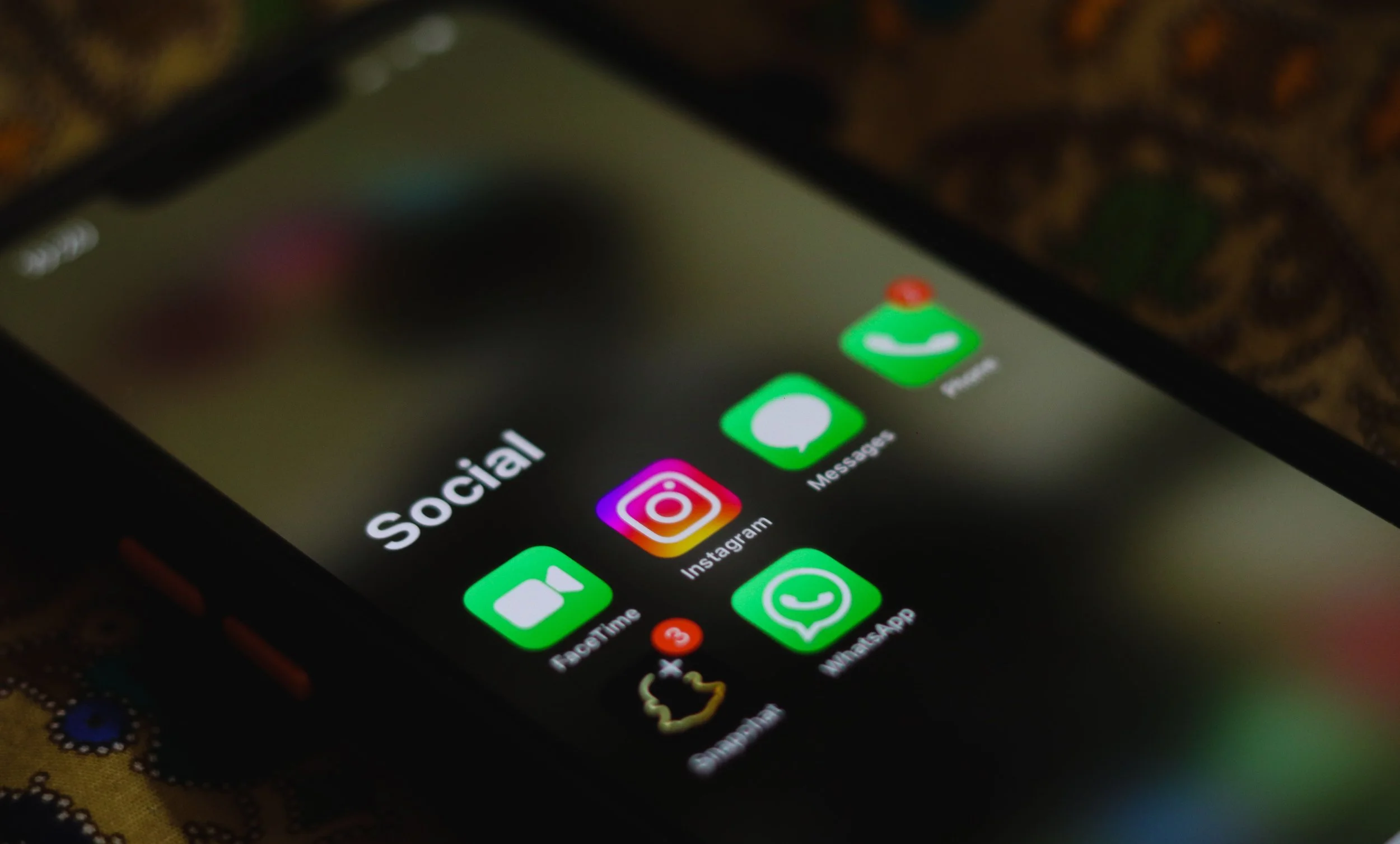
Before breakfast, you can see a war, a political argument, somebody’s engagement, a public humiliation, a fitness transformation, a luxury holiday and a video of a dog displaying a suspicious level of musical talent.
Your nervous system is expected to absorb all of this while you are looking for your toothpaste.
Then, the moment something uncomfortable arises in your own life, relief is available within seconds.
You scroll. You order food. You open another tab. You listen to a podcast. You rehearse the conversation in your head. You send five voice notes about the person instead of one honest message to them.
None of these things is inherently unhealthy. Technology can provide meaningful information, creativity, community and social support. Social media is not a psychological pollutant that must be dramatically expelled from the body every January.
But it has become one of the tools we use to regulate emotion.
The question is not simply how much we use it. It is what happens just before we reach for it.
Sometimes the phone intervenes so quickly that we never learn what we were trying not to feel.

Research on fear of missing out suggests that unmet needs for autonomy, competence and relatedness can be associated with greater social-media engagement. In other words, we may sometimes reach for connection online precisely when we feel disconnected, uncertain or dissatisfied offline (Przybylski et al., 2013).
The distraction may work temporarily. The original emotion, however, does not disappear. It simply remains unnamed.
Connected, but not necessarily in contact
In 2025, the World Health Organisation’s Commission on Social Connection reported that approximately one in six people worldwide experiences loneliness, with rates closer to one in five among adolescents and young adults (World Health Organization, 2025).
That does not mean one in six people is physically alone.
Loneliness is not measured by how many names appear in your phone. It is the painful distance between the connection you have and the connection you feel you need.

You can feel lonely in a relationship.
You can feel lonely at a party.
You can feel lonely while receiving messages all day.
You can also spend an entire weekend alone and feel restored.
This distinction matters because solitude and isolation can look almost identical from the outside.
Solitude says, “I enjoy my own company.”
Isolation says, “It is safer not to need anyone.”
Research supports a nuanced view of time alone. Brief periods of solitude can reduce high-arousal emotions and help people feel calmer, particularly when the solitude feels chosen rather than imposed (Nguyen et al., 2018). A later daily-life study similarly found no universal “correct” balance between solitude and socialising. More time alone was associated with greater autonomy and lower stress, but it could also coincide with loneliness when it did not feel voluntary (Weinstein et al., 2023).
So the important question is not simply, “Am I spending time alone?”
It is:
Am I creating space, or am I disappearing?
When independence becomes a defence

Independence is usually treated as an unquestionable virtue.
Of course, autonomy matters. Being able to support yourself, make decisions, leave unhealthy situations and set boundaries is valuable.
But we sometimes confuse independence with invulnerability.
We imagine that the strongest person needs very little from anyone. They cannot be rejected because they never ask. They cannot be misunderstood because they never fully explain themselves. Nobody can abandon them because they leave first, or never entirely arrive.
That may look like independence. Psychologically, it can also function as a defence.
Healthy independence does not mean becoming need-free. It means being able to need people without completely abandoning yourself.
You can ask for help without becoming helpless.
You can love someone without making them responsible for your identity.
You can establish a boundary without building a wall around your entire life.
You can remain present long enough to discover whether discomfort means this relationship is harmful or simply this relationship requires something vulnerable from me.
Real relationships contain friction. People misunderstand us. They interrupt our routines. They occasionally need support at deeply inconvenient times. They disappoint us, and we disappoint them.
That friction is not always evidence of toxicity.
Sometimes it is simply evidence that another person exists.
A composite example from therapy
Consider a person who has recently ended several relationships.
They describe feeling peaceful now that nobody can demand too much from them. Their routines are stable. Their home is quiet. Their messages are answered only when they feel sufficiently regulated. Anybody who raises conflict is removed because they are “disturbing the peace.”
Initially, this may genuinely feel better.
But over time, life becomes smaller.
There is less conflict, but also less intimacy. Less disappointment, but also less surprise. Less vulnerability, but nobody truly knows them.
The peace is real, in one sense. Their nervous system is no longer encountering the uncertainty of closeness.
But relief is not always the same as healing.
Sometimes relief means a threat has passed.
Sometimes relief means we have avoided the situation that activated us.
The feeling alone cannot tell us which one occurred. We need curiosity.
Research on experiential avoidance is relevant here. Experiential avoidance involves attempting to suppress, escape or control unwanted thoughts, feelings and bodily sensations, even when doing so begins to restrict our lives. One study found that experiential avoidance helped explain the relationship between difficulties regulating emotion and loneliness (Shi et al., 2016).
Avoidance is not always dramatic. It can be highly organised, aesthetically pleasing and expressed in fluent therapeutic language.
Sometimes loneliness wears a dressing gown and calls itself a healing era.

Why naming the emotion matters
A vague emotional state tends to produce a vague response.
“I feel bad” does not tell you what you need.
Are you lonely? Ashamed? Overstimulated? Disappointed? Envious? Excluded? Resentful? Afraid? Emotionally exhausted?
These experiences may overlap physically, but they rarely need the same response.
Overstimulation may require quiet.
Loneliness may require contact.
Resentment may require a boundary.
Shame may require honesty with somebody safe.
Embarrassment may require allowing yourself to survive being imperfect.
Sadness may require time rather than a strategy.
The ability to distinguish between emotional states is sometimes called emotion differentiation or emotional granularity. Research suggests that people who identify their emotions more precisely may be better able to regulate them. One longitudinal study found that rumination predicted later increases in depressive symptoms particularly when participants had lower emotional differentiation (Liu et al., 2020).

Naming an emotion is not magic, and it does not prove that your interpretation is accurate.
Feeling rejected does not necessarily mean you have been rejected.
Feeling unsafe does not always mean you are in danger.
Feeling guilty does not automatically mean you have done something wrong.
Feeling peaceful does not always mean you have made the healthiest decision.
But naming creates a little distance between the emotional signal and the action that follows it.
Neuroscience research on affect labelling has found that putting emotional experiences into words can reduce activity in brain regions involved in emotional reactivity while increasing activity in areas involved in regulation (Lieberman et al., 2007).
You are no longer only inside the feeling. You are also observing it.
Curiosity instead of immediate control
I have spent years in martial arts, where balance is not the same as rigidity.
A fighter who is determined never to be moved often becomes easier to move. They stiffen, lose responsiveness and use enormous energy resisting every shift.
Emotional strength can work similarly.
The goal is not to become untouchable. It is to remain responsive without being completely thrown by every internal movement.
Instead of immediately asking, “How do I get rid of this?”, try asking:
What exactly am I feeling?
Where do I notice it in my body?
What happened just before it appeared?
What meaning am I attaching to what happened?
What am I assuming?
What does the emotion want me to do?
Would that action move me towards or away from the person I want to be?
This is not an invitation to spend six hours cross-examining your sadness under fluorescent lighting.
The aim is not endless analysis. It is enough clarity to choose your next move.
The On Point Check: space, signal and step

When you notice yourself reaching for stimulation, cancelling a plan, cutting somebody off or composing a message from the centre of an emotional storm, try this three-part check.
1. Space
Pause before adding another input or taking immediate action.
Put the phone down. Stop rehearsing the argument. Let the first emotional wave arrive.
This does not need to become a ceremonial wellness practice. Sixty seconds may be enough.
2. Signal
Name what is present as specifically as possible.
Move beyond “bad,” “off” or “triggered.”
Perhaps:
I feel overlooked.
I feel embarrassed.
I feel unimportant.
I feel overwhelmed.
I feel lonely.
I feel afraid that I care more than the other person does.
3. Step
Choose a response that serves the underlying need rather than merely removing the immediate discomfort.
Perhaps you do need to log off, rest or create distance.
Perhaps you need to apologise.
Perhaps you need to send the message.
Perhaps you need to go somewhere people gather, even though staying home feels easier.
Perhaps you need to tell somebody that you are not doing as well as you appear to be.
Protect your peace without protecting yourself from life

Living in different places, working independently and building a life on your own terms can strengthen self-trust. It can also make self-sufficiency extremely seductive.
The less we rely on people, the fewer opportunities they have to disappoint us.
But they also have fewer opportunities to surprise us, support us, challenge us or truly know us.
Independence is not about learning to need less. It may be about understanding your needs well enough that they no longer control you from the shadows.
It is being able to sit alone without abandoning yourself.
To feel an emotion without immediately becoming it.
To allow another person to matter without handing them responsibility for your entire sense of self.
To set boundaries while leaving at least one door in the building.
Your emotions do not always need to be fixed. Your relationships do not always need to be optimised. Your difficult experiences do not always have to become lessons, content or evidence that you are evolving.
Sometimes you need to experience your life before you can understand it.
Protecting your peace matters.
Just be careful that, somewhere along the way, peace does not become another word for never being reached.
Because becoming on point does not mean becoming untouchable.
It means becoming present.
Present with your emotions, present with your choices and present with the people who make your life feel genuinely alive.
You Don’t Need to Have the Right Words Yet
You do not need to understand every feeling before reaching out for support. Often, the work begins by slowing things down enough to notice what is happening beneath the withdrawal, overthinking or pressure to appear unaffected. I offer online counselling for adults in Australia, as well as performance and mindset coaching internationally, through Becoming On Point. Together, we can explore the patterns keeping you disconnected from yourself or others and develop ways of responding that feel clearer, more intentional and more aligned with the life and relationships you want to build.

Frequently Asked Questions
Why do I struggle to know what I am feeling?
Sometimes emotions are difficult to identify because several feelings are occurring at once. At other times, distraction, overthinking or immediately trying to solve the problem interrupts the emotional experience before it becomes clear. Stress, emotional avoidance and growing up in an environment where feelings were dismissed or unsafe to express can also make emotional identification more difficult.
What is the difference between solitude and isolation?
Solitude is generally chosen and restorative. It may help you rest, think or reconnect with yourself. Isolation is more likely to be driven by fear, hopelessness or the belief that it is safer not to need anyone. The distinction is not simply how much time you spend alone, but whether that time expands or gradually restricts your life.
Can protecting your peace become emotional avoidance?
Yes. Boundaries and distance can be healthy, particularly in harmful or chronically draining relationships. However, “protecting your peace” may become avoidance when every experience of discomfort, disagreement or vulnerability is treated as a reason to withdraw. Feeling calm after leaving a situation does not always mean leaving was wrong, but relief alone cannot tell us whether we protected ourselves or avoided something important.
Does independence mean not needing other people?
Healthy independence does not mean eliminating emotional needs. It means remaining connected to your own identity, values and boundaries while allowing yourself to depend on others in appropriate ways. You can ask for support without becoming helpless and allow someone to matter without making them responsible for your entire wellbeing.
Can social media make it harder to understand my emotions?
Social media is not inherently harmful, and online spaces can provide real connection and support. The difficulty arises when scrolling becomes an automatic response to boredom, loneliness, anxiety or interpersonal discomfort. Reaching for stimulation immediately may prevent you from noticing what you were feeling and what you actually needed in that moment.
How can I become better at identifying my feelings?
Begin by pausing before acting and describing the emotion as specifically as possible. Instead of saying “I feel bad” or “I am triggered,” consider whether you feel rejected, embarrassed, lonely, resentful, overwhelmed or uncertain. Then ask what happened before the emotion appeared, what meaning you attached to it and what response would serve the underlying need rather than only reducing the discomfort.
When might counselling help?
Counselling may be helpful when withdrawal, emotional confusion, overthinking or relationship patterns repeatedly interfere with your wellbeing. It can provide space to identify emotions more clearly, understand the protective strategies beneath certain behaviours and develop responses that support both autonomy and meaningful connection.
References
Hunt, M. G., Marx, R., Lipson, C., & Young, J. (2018). No more FOMO: Limiting social media decreases loneliness and depression. Journal of Social and Clinical Psychology, 37(10), 751–768. https://doi.org/10.1521/jscp.2018.37.10.751
Lieberman, M. D., Eisenberger, N. I., Crockett, M. J., Tom, S. M., Pfeifer, J. H., & Way, B. M. (2007). Putting feelings into words: Affect labeling disrupts amygdala activity in response to affective stimuli. Psychological Science, 18(5), 421–428. https://doi.org/10.1111/j.1467-9280.2007.01916.x
Liu, D. Y., Gilbert, K. E., & Thompson, R. J. (2020). Emotion differentiation moderates the effects of rumination on depression: A longitudinal study. Emotion, 20(7), 1234–1243. https://doi.org/10.1037/emo0000627
Nguyen, T. T., Ryan, R. M., & Deci, E. L. (2018). Solitude as an approach to affective self-regulation. Personality and Social Psychology Bulletin, 44(1), 92–106. https://doi.org/10.1177/0146167217733073
Przybylski, A. K., Murayama, K., DeHaan, C. R., & Gladwell, V. (2013). Motivational, emotional, and behavioral correlates of fear of missing out. Computers in Human Behavior, 29(4), 1841–1848. https://doi.org/10.1016/j.chb.2013.02.014
Shi, R., Zhang, S., Zhang, Q., Fu, S., & Wang, Z. (2016). Experiential avoidance mediates the association between emotion regulation abilities and loneliness. PLOS ONE, 11(12), e0168536. https://doi.org/10.1371/journal.pone.0168536
Weinstein, N., Vuorre, M., Adams, M., & Nguyen, T. (2023). Balance between solitude and socializing: Everyday solitude time both benefits and harms well-being. Scientific Reports, 13, 21160. https://doi.org/10.1038/s41598-023-44507-7
World Health Organization. (2025). From loneliness to social connection: Charting a path to healthier societies. Report of the WHO Commission on Social Connection. World Health Organization.
