Wellnessmaxxing Is Getting Out of Hand: A Therapist’s Perspective on Feeling Better

At some point, self-care became less like care and more like an unpaid internship with your nervous system.
Track your sleep. Optimise your protein. Journal. Stretch. Meditate. Hydrate. Regulate. Get sunlight in your eyeballs. Heal your inner child. Breathe through one nostril while forgiving your ancestors.
And look, I am not anti self-care. I work in counselling and psychotherapy-informed support. I talk with people about emotional regulation, burnout, routines, stress, anxiety, self-awareness and nervous system care. I use these tools in my own life. I meditate. I journal. I value my mornings and evenings. I believe in reflection, movement, mindfulness and intentional living.
But I also think we need to be honest about something: wellness culture has become a bit much.
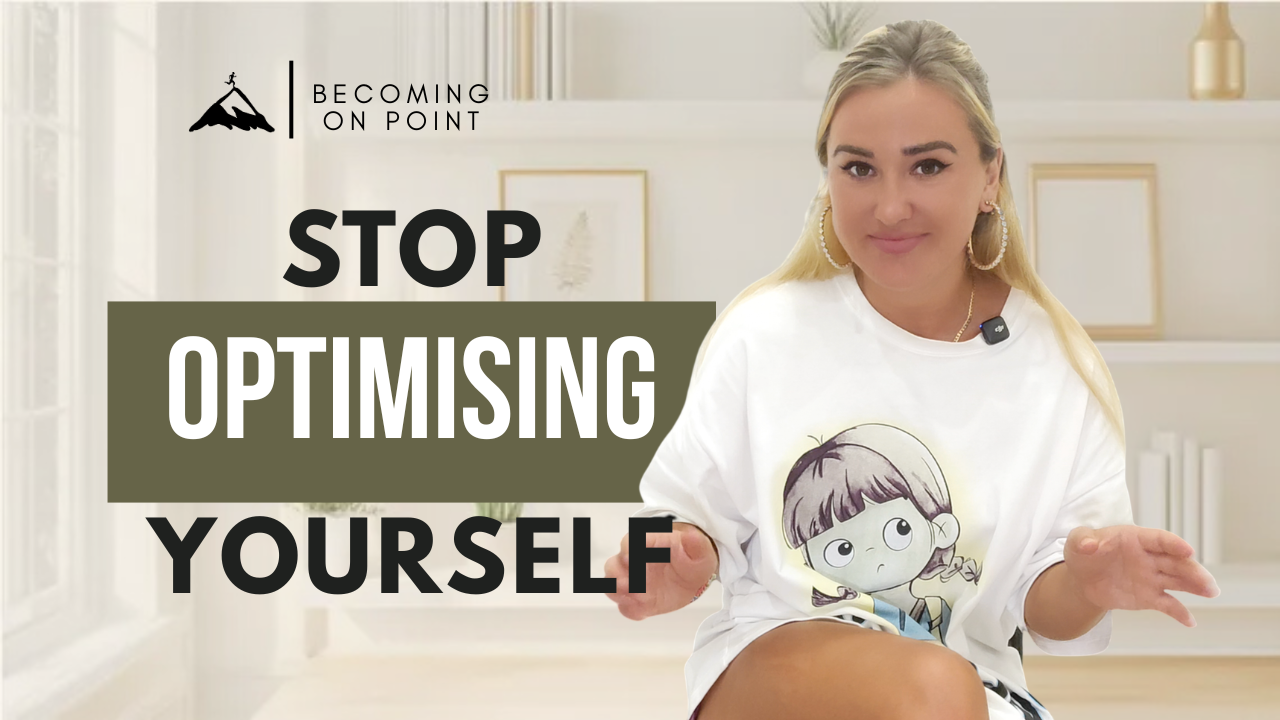
Has self-care started feeling like another job? Watch the companion video where I explore why wellness culture has become so exhausting, and what real, sustainable self-care actually looks like.
In 2026, this backlash has a name: wellnessmaxxing. It refers to the trend of stacking, tracking and optimising health habits - sleep scores, step counts, supplements, morning routines, evening routines, meditation streaks, exercise plans, food rules, nervous system hacks and general attempts to become the most regulated mammal in the group chat.
The broader wellness industry is now openly discussing an “over-optimisation backlash,” where wellbeing has become more measurable, but also more psychologically demanding.
The problem is not that these practices are useless. Many of them are genuinely helpful. The problem is that good tools can quietly become rigid rules. And when self-care turns into another way to judge yourself, it stops feeling like care.
When self-care becomes self-surveillance
There is a difference between checking in with yourself and monitoring yourself.
Checking in sounds like:
“How am I doing?”
“What do I need?”
“What would support me today?”
“What would help me feel more connected, steady or human?”
Monitoring sounds like:
“Did I do enough?”
“Did I do it correctly?”
“Why am I like this?”
“Why can’t I stick to anything?”
“Shouldn’t I know better by now?”
There is a distinction that appears here. Research supports the use of practices such as mindfulness, journaling, exercise, sleep routines and self-compassion for mental health and wellbeing, but the evidence does not suggest that these tools need to be performed perfectly to be useful.
A 2026 meta-analysis found mindfulness techniques had a moderate positive effect on psychological outcomes, while journaling research has found modest but meaningful benefits for mental health symptoms and wellbeing.
In other words, the tools can help.
But the emotional tone you bring to the tools matters.
You can journal as a way of listening to yourself. Or you can journal like you are conducting a hostile audit of your personality.
You can move your body because it helps you feel strong, awake and more in yourself. Or you can move your body because you are trying to punish yourself for being a person who ate pasta.
You can meditate to create space. Or you can meditate while silently rating your own enlightenment performance out of ten.
Same tool. Very different relationship.
The strange guilt of “knowing better”
One of the odd parts of working in the mental health space is that knowing the tools does not make you immune to being human.
Sometimes it makes the guilt sharper.
It is not just, “I didn’t meditate today.”
It becomes, “Interesting. I understand emotional regulation, avoidance, nervous system activation, reflective practice and the importance of consistency… and yet here I am, emotionally prosecuting myself over toast.”
Knowing more can sometimes give your inner critic better vocabulary.
That is why this conversation matters. Because self-care is not only about what you do. It is about the relationship you are having with yourself while you do it.
Self-care that is fuelled by shame may still look impressive from the outside. You might have the journal, the matching water bottle, the meditation app, the meal prep, the morning sunlight, the supplements, the fitness plan and the sleep tracker.
But internally, it can still feel like you are being managed by a tiny HR department in your head.
Why morning and evening routines can help, without becoming sacred law
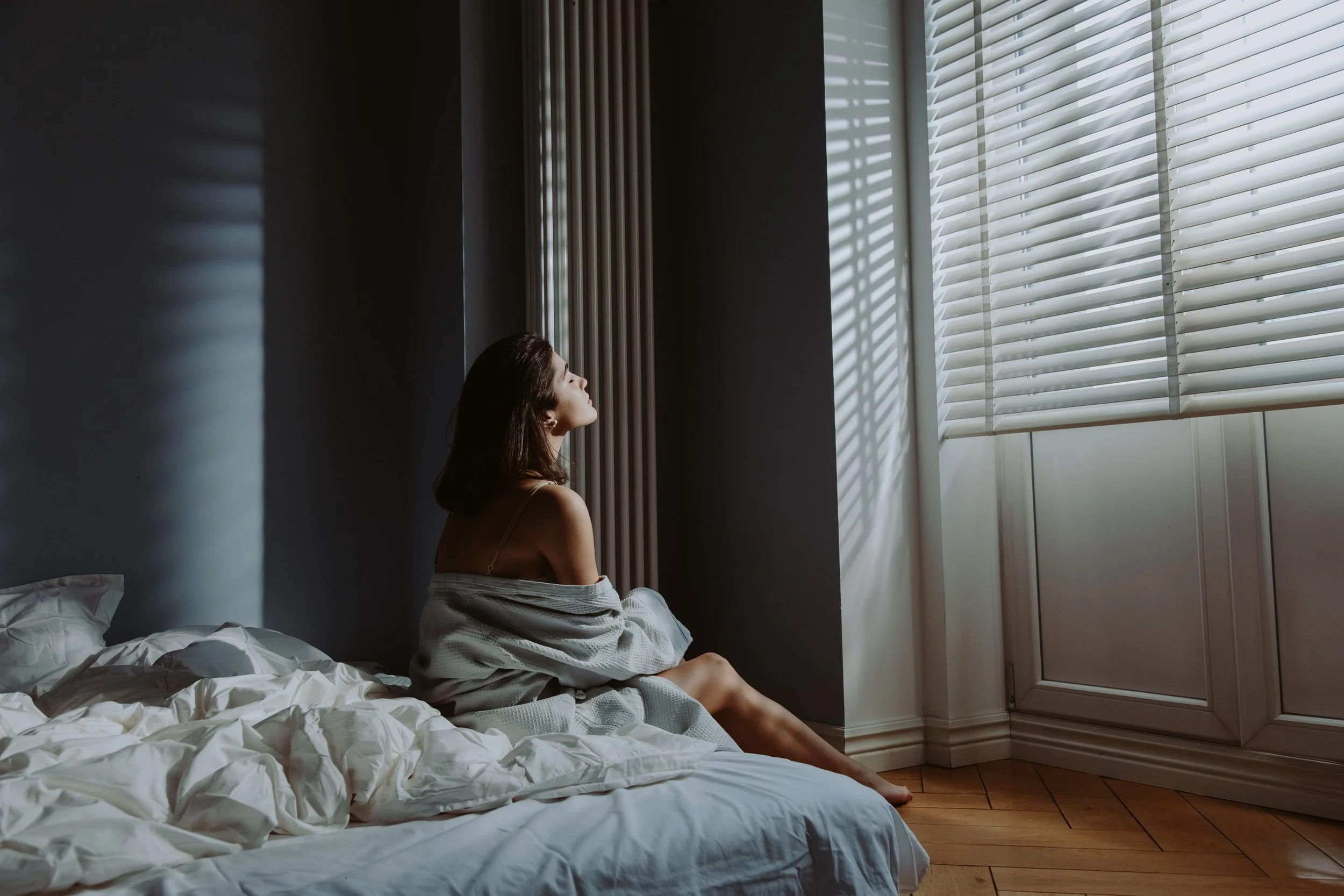
I personally value the first part of the morning and the last part of the evening.
Not because I think the first hour after waking is magically sacred. And not because I believe everyone needs a perfectly curated 5:00am routine involving lemon water, silent contemplation and a linen robe.
But mornings and evenings are psychologically important transition points.
The body has a natural cortisol awakening response, with cortisol typically rising across the first 30–45 minutes after waking. Researchers have suggested this may help prepare the body for the demands of the day, although cortisol patterns vary between people and are influenced by stress, sleep, health and measurement factors.
Waking is also not an instant switch. Sleep inertia - that groggy, foggy transition from sleep to wakefulness - can temporarily affect alertness, mood and cognitive performance. Morning light exposure may also support circadian rhythm and sleep quality, with emerging research suggesting that the timing of sunlight exposure can matter for next-night sleep.
So yes, I do care about mornings.
I try to give myself time before the world barges in wearing shoes.
Some mornings, that means meditation. Some mornings, it means journaling. Some mornings, it means listening to a meditation while having a coffee, because I am mindful but I am also not interested in pretending caffeine is not part of my personality.
Some mornings, it is simply not grabbing my phone immediately and letting the entire internet climb into bed with me.
All of this matters, not because I completed a perfect routine, but because I gave myself a chance to arrive.
Evenings matter, too. Sleep hygiene and cognitive behavioural therapy for insomnia both emphasise the importance of consistent cues, wind-down routines and reducing behaviours that interfere with sleep. But again, the point is not to become militant about bedtime. The point is to create a softer landing.
Sometimes my evening routine is reflective and calm. Sometimes it is dishes, emails, forgetting why I walked into a room and negotiating with myself about bedtime like a toddler with a mortgage.
But even then, I try to ask something simple:
“What did I carry today?”
“What can I put down?”
“What do I need to stop rehearsing?”
“What would help me feel safe enough to rest?”
The nervous system does not always need a full intervention.
Sometimes it just needs acknowledgement.
The backlash spiral: when strictness makes things worse
Here is the part I think many people will recognise.
When I get too strict with myself - with food, exercise, routines, productivity or wellness habits, I do not always become more consistent.
Sometimes I backlash.
I set the standard too high. Then reality interrupts. I miss the workout. I eat something I told myself I would not eat. I skip the journal. I sleep in. I lose the routine.
And then the internal commentary starts.
“See? You can’t stick to anything.”
“You should know better.”
“You’re falling behind.”
“You’ve ruined it now.”

And then one imperfect moment becomes evidence in a much larger trial against my character.
This is where all-or-nothing thinking becomes dangerous. A 2026 BMC Public Health study explored all-or-nothing thinking in exercise and found that rigid, idealised criteria can lead people to abandon movement altogether when their original plan becomes unworkable. In simple terms: if the “proper” workout cannot happen, people may choose no workout at all.
That pattern shows up far beyond exercise.
If I cannot meditate for 20 minutes, I do nothing.
If I cannot eat perfectly, I eat chaotically.
If I cannot have a beautiful morning routine, I scroll for 45 minutes and then mentally abuse myself.
If I cannot be “well” correctly, I quietly give up.
The issue is not lack of discipline. Often, the issue is a standard so brittle that real life cannot touch it without breaking it.
Self-compassion is not letting yourself off the hook

A lot of people worry that if they are kinder to themselves, they will become lazy, complacent or completely unhinged in the pantry.
But self-compassion is not the same as having no standards.
Self-compassion is what helps you recover after being human.
A 2023 study on dietary lapses found that higher self-compassion after a lapse was associated with lower negative affect. That matters because shame does not usually make people more regulated; it often makes people more reactive, avoidant or stuck in the very behaviour they were trying to change.
More recent research also suggests self-compassion training can reduce perfectionism and self-criticism, although it is not a magic cure and may not outperform every active stress-reduction approach.
This is the point:
Self-compassion is not, “Do whatever you want, nothing matters.”
It is, “You had a hard moment. Can we respond in a way that helps rather than making the hole deeper?”
It is the difference between:
“I missed the workout, so I have failed.”
And:
“I missed the workout. What is the smallest useful thing I can do now?”
It is the difference between:
“I ate badly, so the day is ruined.”
And:
“That did not feel great. What would help my body feel supported from here?”
It is the difference between:
“I did not journal, so I am not committed to my growth.”
And:
“I did not journal today. Maybe the tool I needed was rest, connection, food, movement, or simply not being cruel to myself.”
Think toolbox, not prison sentence

This is the metaphor I keep coming back to:
I have a toolbox.
Not a prison sentence.
Meditation is a tool.
Journaling is a tool.
Movement is a tool.
Breathwork is a tool.
A walk is a tool.
A proper meal is a tool.
A shower is a tool.
Calling someone back is a tool.
Sitting outside for five minutes and remembering I am not just a head attached to a calendar is a tool.
Looking in the mirror in the morning and saying, “I am safe. I am worthy. I am allowed to take up space today,” is a tool.
And some days, yes, part of me feels ridiculous saying those things.
But I would rather feel slightly ridiculous while speaking kindly to myself than feel very sophisticated while emotionally bullying myself before breakfast.
The point of a toolbox is not to use every tool every day.
If you are hanging a picture, you do not need a chainsaw.
If you are emotionally fragile at 7:12am, you may not need a full shadow-work excavation. You might need coffee, sunlight and one honest sentence in a notebook.
The mature skill is not doing everything.
The mature skill is noticing what is needed.
Practical tools for wellness fatigue
If self-care has started to feel like another thing you are failing at, try this.
1. Ask: is this care or control?
Before doing a wellbeing practice, pause and ask:
“Am I doing this to connect with myself, or to control myself?”
You may still choose the same practice. But the question changes the emotional climate.
A walk from care feels different to a walk from punishment.
A journal entry from curiosity feels different to a journal entry from self-surveillance.
2. Use a “minimum viable” version
If your ideal routine is not possible, shrink the routine instead of abandoning it.
Ten minutes of meditation can become three breaths.
A gym session can become a walk around the block.
A full journal entry can become one sentence:
“What am I feeling, and what do I need?”
This directly challenges all-or-nothing thinking, which research suggests may interfere with sustained exercise and behaviour change when people cannot meet their idealised plan.
3. Protect your sensitive windows, but do not worship them
The morning and evening are useful windows. Use them gently.
Morning might mean light, coffee without immediate scrolling, a short meditation, a few lines of journaling or simply sitting quietly before the day starts.
Evening might mean dimmer lights, a slower transition, a short reflection or putting the phone down before your brain starts a late-night documentary series called Everything I Have Ever Done Wrong.
But do not turn these windows into another exam.
The point is not perfection.
The point is priming your system toward steadiness.
4. Stop treating your tracker like a moral authority
Wearables and apps can provide useful information, but they can also create anxiety when the number starts mattering more than your lived experience. Research on orthosomnia describes an unhealthy preoccupation with achieving ideal sleep data, particularly when sleep trackers become a source of worry rather than support.
Use data as information, not identity.
Your sleep score is not your worth.
Your step count is not your discipline.
Your meditation streak is not your emotional maturity.
5. Put connection back into wellness
This is the part wellness culture often misses.
Humans are not meant to regulate entirely alone.
Yes, journal. Meditate. Move. Reflect. Get sunlight. Drink water. Use the tools. But also stay connected to people, place, humour, beauty, nature, community, conversation and ordinary life.
Social connection is not a fluffy add-on. WHO has identified loneliness and social isolation as serious public health concerns, and a 2023 meta-analysis of 90 cohort studies found both social isolation and loneliness were associated with increased risk of all-cause mortality.
That does not mean you need to panic-text everyone you know after reading this.
It means your wellbeing should not become so private, optimised and self-managed that you forget to be in relationship with the world.
Sometimes the tool is not another app.
Sometimes the tool is calling the friend back.
Sometimes the tool is going outside.
Sometimes the tool is laughing at something stupid.
Sometimes the tool is letting yourself be a person instead of a project.
The point of self-care
The goal is not to become perfectly well-managed.
The goal is to feel more human.
To feel whole enough to be here.
To feel connected to yourself.
To feel connected to other people.
To feel connected to your environment.
To be able to have a coffee without turning it into a productivity supplement.
To move your body without making it an apology.
To rest without needing to deserve it first.
To have a bad day without declaring your entire healing journey bankrupt.
Self-care is useful.
Self-surveillance is exhausting.
So if your self-care has started to feel like another thing you are failing at, maybe the answer is not to try harder.
Maybe the answer is to soften the contract.
Use the tool that fits.
Let some days be simple.
Let care feel like care again.
Where to From Here?

If you've realised that your version of self care has quietly become another item on your to do list, you're not alone. Real wellbeing isn't built by squeezing more optimisation into an already full life. It's built by understanding yourself well enough to know what you actually need.
If you're feeling burnt out, emotionally flat, or caught in cycles of pressure, perfectionism or constant self-improvement, therapy can help you make sense of what's beneath the surface, rather than simply adding another strategy on top.
If you're ready to move beyond simply functioning and towards feeling more grounded, clear and connected, you're welcome to book an online session or explore more evidence-based articles on Becoming On Point.
Frequently Asked Questions
What is wellnessmaxxing?
Wellnessmaxxing refers to the pursuit of constantly optimising your physical and mental health through routines, supplements, exercise, nutrition, sleep tracking and other self-improvement practices. While many of these habits can be beneficial, they become problematic when the pursuit of health starts creating stress instead of reducing it.
Is wellnessmaxxing bad for mental health?
Not inherently. Looking after your health is important. The problem arises when wellness becomes driven by fear, guilt, perfectionism or the belief that you're never doing enough. At that point, behaviours intended to improve wellbeing can begin increasing anxiety and emotional exhaustion.
Why does self care sometimes feel like another job?
When self care becomes another checklist to complete, it stops serving its original purpose. Many people begin treating rest, exercise and healthy habits as obligations rather than sources of nourishment, leaving them feeling guilty whenever they fall short of their own expectations.
How do I know if my wellness routine has become unhealthy?
Some common signs include:
Feeling anxious or guilty if you miss part of your routine.
Constantly searching for the "perfect" health advice.
Spending excessive time, money or mental energy trying to optimise yourself.
Feeling like you're never doing enough despite your efforts.
Struggling to relax without feeling unproductive.
What does real self care actually look like?
Real self care is flexible rather than rigid. It adapts to your circumstances, recognises your physical and emotional needs, and makes room for rest, enjoyment, relationships and imperfection. Rather than asking, "How can I optimise today?" it asks, "What would genuinely support me right now?"
Why do I feel guilty when I rest?
For many people, rest has become associated with laziness, falling behind or not living up to their potential. Social media, productivity culture and constant exposure to self-improvement content can reinforce the idea that every moment should be used to become better. Therapy often helps people unpack where these beliefs came from and build a healthier relationship with rest.
Can therapy help if I'm burnt out from trying to improve myself?
Yes. Therapy isn't about giving you more habits to follow. It's about understanding the emotional patterns, beliefs and expectations that keep you trapped in cycles of constant striving. As those patterns become clearer, it often becomes easier to make choices that support both achievement and genuine wellbeing.
How do I know if I need therapy or if I'm simply stressed?
Everyone experiences stress. Therapy becomes particularly helpful when stress feels persistent, begins affecting your relationships, work, sleep or enjoyment of life, or when you notice yourself repeatedly falling into the same patterns despite your best efforts. You don't need to be in crisis to benefit from understanding yourself more deeply.
References
Global Wellness Summit. The Future of Wellness 2026 Trends and The Over-Optimization Backlash. These reports describe the 2026 backlash against over-optimisation and the shift away from wellness as performance.
Psychology Today. “Wellnessmaxxing”: When Self-Care Leads to Burnout. This article discusses wellnessmaxxing as a social media-linked trend where self-care becomes stacked, measurable and potentially exhausting.
Sarca, M. et al. The Effects of Mindfulness Techniques on Anxiety, Depression and Stress. 2026 meta-analysis reporting a moderate improvement in psychological outcomes associated with mindfulness techniques.
Sohal, M. et al. Efficacy of Journaling in the Management of Mental Illness: A Systematic Review and Meta-Analysis. 2022 review finding journaling interventions were associated with statistically significant reductions in mental health symptom scores.
Diniz, G. et al. The Effects of Gratitude Interventions: A Systematic Review and Meta-Analysis. 2023 review finding gratitude interventions were associated with greater gratitude, better mental health and fewer symptoms of anxiety and depression.
Bowles, N. P. et al. The Circadian System Modulates the Cortisol Awakening Response. 2022 research on cortisol rising after morning awakening.
Elder, G. J. et al. The Cortisol Awakening Response. 2024 Endocrine Reviews article describing the rapid increase in cortisol across the first 30–45 minutes after waking.
Hilditch, C. J. & McHill, A. W. Sleep Inertia: Current Insights. 2019 review describing sleep inertia and its impact on cognitive performance after waking.
de Menezes-Júnior, L. A. A. et al. The Role of Sunlight in Sleep Regulation. 2025 research linking morning light exposure with sleep outcomes.
Anderson, A. R. et al. Does Sunlight Exposure Predict Next-Night Sleep? 2025 daily diary study suggesting morning sunlight exposure may support next-night sleep quality.
Sleep Health Foundation. Cognitive Behavioural Therapy for Insomnia. Australian sleep health resource noting CBT-I as a proven treatment and recommended first-line approach for insomnia.
Segar, M. L. et al. The Secret Life of All-or-Nothing Thinking with Exercise: New Insights into an Overlooked Barrier. BMC Public Health, 2026. Study exploring how rigid exercise standards can lead people to abandon activity when their plan becomes disrupted.
Hagerman, C. J. et al. The Role of Self-Compassion and Its Individual Components Following Dietary Lapses. 2023 study finding higher self-compassion after dietary lapses was associated with lower negative affect.
Borgdorf, K. S. A. et al. Effects of a Brief Online Self-Compassion Training on Perfectionism, Self-Criticism and Social Anxiety. 2025 study finding reductions in perfectionism and self-criticism following self-compassion training.
Jahrami, H. et al. Prevalence of Orthosomnia in a General Population Sample. 2024 study discussing the relationship between sleep-tracking technologies and sleep-related anxiety.
World Health Organization. WHO Commission on Social Connection. WHO identifies loneliness and social isolation as serious public health concerns affecting mortality, physical health and mental health.
Wang, F. et al. A Systematic Review and Meta-Analysis of 90 Cohort Studies of Social Isolation, Loneliness and Mortality. Nature Human Behaviour, 2023. Found social isolation and loneliness were associated with increased all-cause mortality risk.
