Why You Don’t Trust Yourself
The Science of Confidence, Self-Doubt and Self-Trust

Many people I speak with, including my clients, seem to think they have a confidence problem. That somewhere, in certain situations, they lack something other people have. They tell me they wish they could speak up more, trust themselves more, stop second-guessing their decisions, or show up with greater certainty. When they don't, they often assume confidence is the missing piece.
What is interesting is that most of these people are already functioning in ways that require confidence. They are raising children, running businesses, leading teams, changing careers, moving countries, caring for others and navigating significant uncertainty. The issue is often not an absence of confidence, but an expectation that confidence should arrive before action.
This idea dominates self-development culture. Confidence is treated like a missing ingredient. Build enough of it and life will begin to move.
The problem is that confidence is often the wrong target.
After years of working with high performers, athletes, professionals, business owners and individuals navigating anxiety, burnout and major life transitions, I've noticed something interesting. Many of the people who appear confident are not particularly certain. They simply trust themselves enough to move despite uncertainty.

If you'd prefer to explore these ideas in video format, I've discussed them in greater depth here!
Contemporary psychology and neuroscience increasingly point in the same direction. Confidence appears less like a personality trait and more like an inference. It reflects the brain's estimate of how reliable a prediction might be (Fleming, 2024). Self-trust, however, appears to sit deeper.
A useful distinction is this:
Confidence is trusting your predictions. Self-trust is trusting your ability to recover when your predictions are wrong.

This difference is key.
Confidence Is Not Competence
One of the most important developments in recent confidence research comes from the study of metacognition, the mind's ability to monitor and evaluate its own thinking.
According to Stephen Fleming (2024), confidence is not a direct readout of ability. It is a judgement about ability.
In other words, confidence is not competence itself. It is your brain's estimate of competence.
This explains why brilliant people often doubt themselves while less capable individuals can appear remarkably certain. The feeling of confidence does not necessarily indicate accuracy.

Researchers increasingly describe confidence as a metacognitive judgement, a higher-order prediction about whether your decision is likely to be correct (Fleming, 2024).
From this perspective, confidence functions less like a personality trait and more like an internal forecasting system.
The practical implication is significant.
Many people spend years trying to feel more confident when the real issue is calibration. They are attempting to alter the forecast rather than improving the quality of the information being used to generate it.
What do I mean by this…?
Why Confidence Is Often the Wrong Target
The psychologist Albert Bandura spent decades studying what he termed self-efficacy: the belief that one can successfully execute behaviours required to achieve desired outcomes.
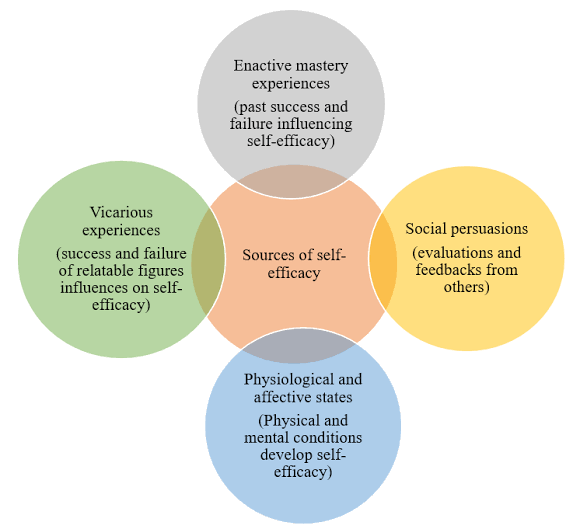
Self-efficacy and confidence are often treated as interchangeable concepts, but they are not the same thing.
Confidence is largely emotional.
Self-efficacy is behavioural.
Confidence asks:
"How certain do I feel?"
Self-efficacy asks:
"Can I do difficult things?"
The distinction matters because self-efficacy is built through evidence.
Every difficult conversation survived.
Every setback navigated.
Every challenge endured.
Every skill developed.
These experiences accumulate into a body of proof.
This reverses the way confidence is usually discussed.
Many people assume the sequence is:
Confidence → Action → Success
Research suggests the opposite is often true (Bandura, 1997).
Action → Evidence → Self-Efficacy → Confidence
Confidence is frequently the receipt, not the investment.
Waiting to feel confident before acting can therefore become a trap. The evidence required to generate confidence never arrives because the behaviours capable of producing that evidence never occur.
Why People Stop Trusting Themselves
When clients describe chronic self-doubt, the issue is rarely intellectual.
More often, it is relational.
Modern attachment research has expanded beyond questions of security and insecurity into the concept of epistemic trust, a term used by Peter Fonagy and colleagues (2017) to describe our willingness to regard our experiences, perceptions and emotions as valid sources of information.
Children learn whether their internal world can be trusted through relationships.
When emotions are acknowledged, curiosity is encouraged, and experiences are validated, a person gradually develops a sense that their internal signals matter.
When feelings are repeatedly dismissed, criticised, ignored or distorted, a different lesson can emerge.
My emotions are unreliable.
My perceptions are wrong.
My instincts cannot be trusted.
Years later, this often appears as overthinking.
The person is not lacking intelligence. They are attempting to outsource certainty because their own internal experience no longer feels trustworthy.
Many high-functioning adults operate from this position without realising it.
Externally capable.
Constantly seeking one more piece of information before committing to a decision.
Self-Trust Begins in the Body
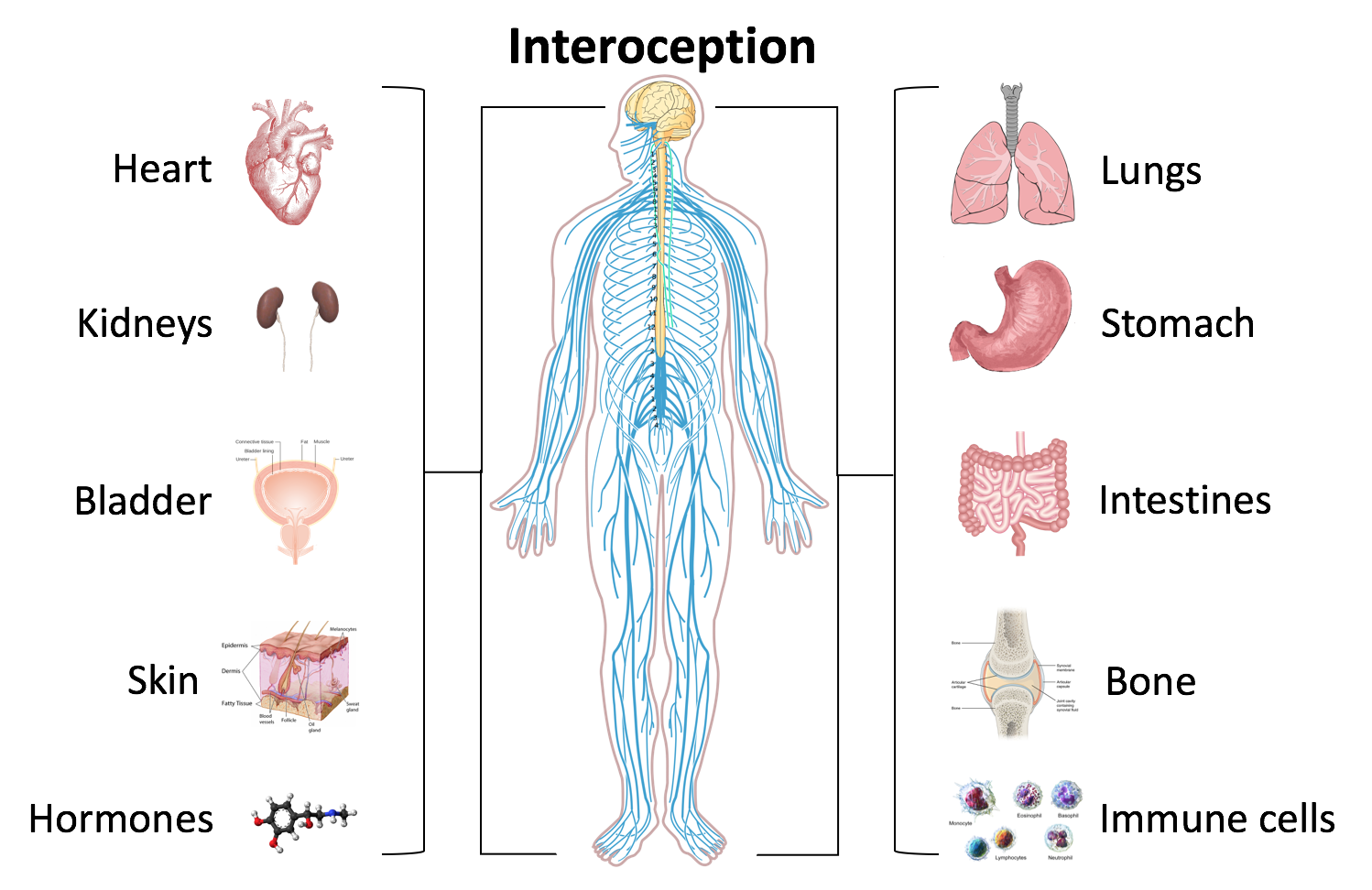
Most discussions about confidence remain trapped in cognition.
The body receives far less attention.
This is a mistake.
Research on interoception, the perception of internal bodily signals, suggests that our ability to recognise and interpret information from within the body plays a central role in self-awareness, emotional regulation and decision-making (Chen et al., 2021; Tallon-Baudry, 2023).
Your brain is continuously receiving information about heart rate, breathing patterns, muscular tension, fatigue, hunger, pain and physiological arousal.
These signals contribute to how you interpret situations.
The challenge is that many high performers become exceptionally skilled at ignoring them.
They override fatigue.
Suppress stress.
Push through exhaustion.
Disconnect from emotion.
Initially, this can appear productive.
Over time, however, people begin losing confidence in their internal signals.
If you spend years overriding your nervous system, eventually you stop knowing what information your body is providing.
Self-trust becomes difficult because the instrument through which experience is measured no longer feels reliable.
Confidence, Uncertainty and the Predicting Brain
One of the most influential frameworks in modern neuroscience is predictive processing.
According to Karl Friston's work, the brain operates as a prediction engine, constantly generating models about what is likely to happen next (Friston, 2010).
It predicts social outcomes.
Physical outcomes.
Emotional outcomes.
Future consequences.
From this perspective, confidence can be understood as the brain's estimate of how much trust should be placed in a particular prediction.
This reframes many confidence struggles.
The person who repeatedly asks:
"What if I fail?"
may not actually have a confidence problem.
They may have an uncertainty problem.
Research consistently shows that intolerance of uncertainty plays a major role in anxiety, indecision and avoidance.
Many people seek confidence because they believe confidence will eliminate uncertainty.
It won't.
No amount of confidence can guarantee an outcome.
A business may still fail.
A relationship may still end.
A speech may still go badly.
A risk may still produce disappointment.
Psychological health appears less dependent on certainty and more dependent on adaptability.
The people who trust themselves most are often not the most certain.
They are the most willing to engage with uncertainty.
Five Evidence-Based Ways to Rebuild Self-Trust

1. Use the Fact, Fear and Prediction Framework
When anxiety escalates, three things often become fused together.
Facts.
Fears.
Predictions.
Separating them creates clarity.
Ask yourself:
What do I know?
What am I afraid of?
What outcome am I predicting?
For example:
Fact: I have a presentation next week.
Fear: People will think I'm incompetent.
Prediction: I'll perform poorly and damage my reputation.
These are not the same thing.
The ability to distinguish them improves metacognitive accuracy and reduces emotional reasoning.
2. Build an Evidence Log
Instead of asking:
"Do I feel confident?"
Ask:
"What evidence do I have that I can cope?"
Create a record of situations you have successfully navigated.
Difficult conversations.
Unexpected setbacks.
Professional challenges.
Moments of uncertainty.
Over time, this creates a concrete body of evidence from which self-efficacy can emerge.
3. Conduct a Body Signal Check-In

Before making important decisions, pause and assess:
Am I fatigued?
Overstimulated?
Hungry?
Sleep deprived?
Holding tension?
Emotionally activated?
Physiological states significantly influence confidence estimates.
Many apparent confidence problems are actually nervous system problems.
4. Make Values-Based Decisions
Values provide direction when certainty is unavailable.
A useful question is:
If certainty never arrives, what action aligns with the person I want to become?
This shifts attention away from predicting outcomes and toward living deliberately.
5. Create a Recovery Plan
This may be the most powerful exercise of all.
Most people focus on outcome confidence.
Few develop recovery confidence.
Instead of asking:
"Will this work?"
Ask:
"If this goes badly, how will I respond?"
The brain often relaxes when it recognises that failure is survivable.
Self-trust grows when we develop confidence in our capacity to recover, adapt and learn.
When Therapy Can Help

There are times when self-trust is not rebuilt through productivity strategies or mindset techniques.
Chronic self-doubt can be rooted in attachment wounds, prolonged stress, burnout, trauma, perfectionism or years of disconnection from emotional and bodily experience.
Therapy can provide a space to examine how these patterns developed and how they continue to shape decision-making.
The goal is not to eliminate uncertainty.
The goal is to develop a more reliable relationship with yourself.
One that allows you to interpret internal signals more accurately, regulate emotional states more effectively and respond to challenges with greater flexibility.
Conclusion
Perhaps confidence has been the wrong target all along.
Most people are not waiting for confidence. They are waiting for certainty. They want to know the decision will work out, the conversation will go well, the relationship will last, or the risk will be worth it.
Life rarely offers that kind of reassurance.
What it can offer is evidence. Evidence that you can make decisions, tolerate discomfort, adapt when things change and recover when things do not go to plan.
Over time, that evidence becomes self-trust.
And self-trust is often what allows confidence to emerge in the first place.
If you find yourself caught in overthinking, second-guessing, perfectionism or a persistent difficulty trusting yourself, counselling, psychotherapy and performance coaching can help you better understand these patterns and develop a steadier relationship with uncertainty.
You can learn more about working with me through Becoming On Point or book a session to begin exploring these patterns in greater depth.
References
Bandura, A. (1997). Self-efficacy: The exercise of control. W. H. Freeman.
Chen, W. G., Schloesser, D., Arensdorf, A. M., et al. (2021). The emerging science of interoception: Sensing, integrating, interpreting, and regulating signals within the self. Trends in Neurosciences, 44(1), 3-16.
Fleming, S. M. (2024). Metacognition and confidence: A review and synthesis. Annual Review of Psychology, 75, 579-605.
Fonagy, P., Luyten, P., Allison, E., & Campbell, C. (2017). What we have changed our minds about: Part 2. Borderline personality disorder, epistemic trust and the developmental significance of social communication. Borderline Personality Disorder and Emotion Dysregulation, 4(1), 9.
Friston, K. (2010). The free-energy principle: A unified brain theory? Nature Reviews Neuroscience, 11(2), 127-138.
Tallon-Baudry, C. (2023). Interoception: Probing internal state is inherent to perception and cognition. Neuron, 111(21), 3401-3411.
