Why Do I Overthink Everything? When Your Mind Is Trying to Protect You

There is a particular kind of exhaustion that comes from living inside a mind that never quite stands down.
You replay the conversation after it has ended. You analyse the message that was sent, and the one that was not. You revisit a decision long after you have made it. You try to work out what someone meant, what might go wrong, whether you have missed something, whether you should prepare for disappointment before it has had the chance to arrive.
People often call this “overthinking,” as though it is simply a bad habit or a sign that you need to relax.
But in psychotherapy, I am rarely interested in dismissing a pattern before understanding what it has been trying to do for someone.
Prefer to watch? Explore why overthinking may be connected to protection, attachment and uncertainty in the first episode of Becoming On Point. Watch on YouTube →
Overthinking is not a clinical diagnosis in itself. More precisely, it may involve worry, which tends to look ahead and ask “What if something goes wrong?”, or rumination, which tends to look backwards and ask “Why did that happen?” Together, these are often described in psychological research as repetitive negative thinking: persistent thought loops that feel difficult to disengage from and are associated with anxiety and depression.
A 2025 transdiagnostic meta-analysis described repetitive negative thinking as a process implicated across several forms of psychological distress and examined how cognitive behavioural interventions can reduce it. (PMC)
Yet the important question is not simply, “How do I stop thinking?”
A better beginning may be:
What has my mind learned it needs to protect me from?
Overthinking Is Often an Attempt to Feel Safe
Overthinking can feel deeply irrational when you are caught inside it. Part of you knows that replaying the same interaction for the tenth time is unlikely to give you a new answer. You may know that checking, analysing or seeking reassurance only calms you briefly.
And still, the mind returns to the loop.

That is because overthinking often offers something compelling: the feeling that, if you think hard enough, you might avoid being hurt, embarrassed, rejected, criticised or caught off guard.
It is the internal promise of:
If I can predict it, perhaps I can prevent it.
This does not mean every person who overthinks has experienced trauma, insecure attachment or a difficult childhood. Human minds are naturally designed to anticipate problems and solve them. But when this process becomes persistent, exhausting and disconnected from useful action, it is worth exploring whether thinking has shifted from reflection into protection.
Reflection creates insight.
Overthinking often creates surveillance.
What Can You Do When You Notice You Are Overthinking?

Understanding the pattern matters. But insight alone is not always enough to interrupt it.
Here are practical steps you can use when your mind begins looping.
1. Name the process before engaging with the content
When you are overthinking, the mind wants you to enter the argument immediately:
Was that message rude? Should I explain myself? Have I made the wrong choice?
Before answering the thought, name what is happening:
“I am noticing a worry loop.”“I am replaying because I feel uncertain.”“My attachment system may be activated.”“This thought feels urgent, but urgency does not automatically make it accurate.”
This is not dismissing your feelings. It is creating enough distance to decide whether the thought requires action or simply attention.
Approaches such as metacognitive therapy focus not only on what someone thinks, but on how they respond to thinking — including the beliefs that worry is necessary, protective or uncontrollable. A randomised controlled trial of metacognitive therapy for generalised anxiety disorder found substantial improvement maintained at one-year follow-up. (PMC)
2. Ask: is this reflection, problem-solving or protection?

Not all thinking is overthinking.
Useful reflection leads somewhere.
Useful problem-solving identifies an action.
Protective thinking often circles without resolution.
Try asking:
Is there a decision I can make today?
Is there a conversation I genuinely need to have?
Is there new information available?
Or am I mentally revisiting the same uncertainty because I cannot yet tolerate how it feels?
A simple distinction:
If thinking is creating action, it may be problem-solving. If thinking is only creating more thinking, it may be protection.
3. Separate fact from prediction
When you feel activated, write two headings:
What I know: For example: “They have not replied since this morning.”
What I am predicting: For example: “They are upset with me. They have lost interest. I have done something wrong.”
This is not an exercise in forcing positive thinking. The aim is to recognise when a prediction has been promoted to a fact without sufficient evidence.
From an attachment and mentalisation perspective, this helps restore curiosity where fear has created certainty.
4. Ask what the thought is trying to protect
Rather than arguing with the thought, become interested in its purpose.
Ask:
What feels at risk right now?
Rejection?
Criticism?
Being misunderstood?
Failing?
Losing control?
Feeling dependent?
Being disappointed?
Often the thought loop becomes less mysterious once the fear underneath it is named.
You may realise: This is not only about the email. It is about my fear of getting it wrong.
Or: This is not only about the delayed message. It is about what distance brings up in me.
That kind of insight is more useful than endlessly analysing the surface details.
5. Regulate before you decide

When you are in a strong state of threat anticipation, it may not be the best moment to send the message, end the relationship, resign from the job, confront the person or make a major decision.
Regulation does not mean suppressing emotion or pretending nothing matters. It means giving yourself enough steadiness to respond with intention rather than urgency.
You might try:
stepping away from your phone for ten minutes;
placing both feet on the floor and orienting to the room around you;
taking a short walk without trying to solve the issue;
lengthening your exhale;
writing down the thought rather than acting on it immediately;
postponing a response until you feel less activated;
contacting someone supportive without asking them to confirm your worst fear.
A regulated pause is not avoidance.
It is often the condition that makes clearer thinking possible.
6. Practise tolerating small amounts of uncertainty
If overthinking is partly driven by intolerance of uncertainty, then repeatedly demanding complete reassurance can accidentally strengthen the very pattern you want to change.
Begin gently.
You might:
wait before checking for a response;
make a low-stakes decision without reviewing it repeatedly;
allow someone’s mood to belong to them without immediately investigating;
notice the urge to ask for reassurance and wait a few minutes before deciding whether you need it;
accept that a conversation can be imperfect and still repairable.
The point is not to force yourself into distress.
The point is to help your system learn that uncertainty can be uncomfortable without being catastrophic.
7. Bring persistent patterns into therapy
When overthinking is affecting sleep, concentration, relationships, work, confidence or your capacity to be present in your own life, therapy can help.
Therapy is not simply a place to be told to think differently.
It can provide a relationship in which patterns become visible and understandable: the attachment fears beneath reassurance-seeking, the shame beneath perfectionism, the emotional avoidance beneath constant analysis, or the physiological activation that makes rest and uncertainty feel unsafe.
Depending on your needs, therapeutic work may draw on approaches such as psychotherapy, attachment-informed therapy, cognitive behavioural strategies, metacognitive approaches, emotional regulation work, somatic strategies or reflective exploration.
The aim is not to turn you into someone who never thinks deeply.
The aim is to help you recognise when thinking is supporting your life - and when it is protecting you from living it.
Attachment Theory: When the Mind Learns to Monitor Connection
John Bowlby’s attachment theory proposed that our early experiences of care and emotional availability contribute to what he called internal working models: our developing expectations of ourselves, other people and relationships.

In everyday language, these models can shape questions such as:
Will people be available when I need them?
Is it safe to express what I feel?
Am I lovable when I am not performing?
Will conflict lead to repair, rejection or withdrawal?
Do I need to remain alert in order to maintain connection?
Adult attachment research later developed this further. Mikulincer, Shaver and Pereg described how attachment anxiety may involve hyperactivating strategies: increased monitoring for signs of relational threat, rejection, distance or abandonment. (Adult Attachment Lab)
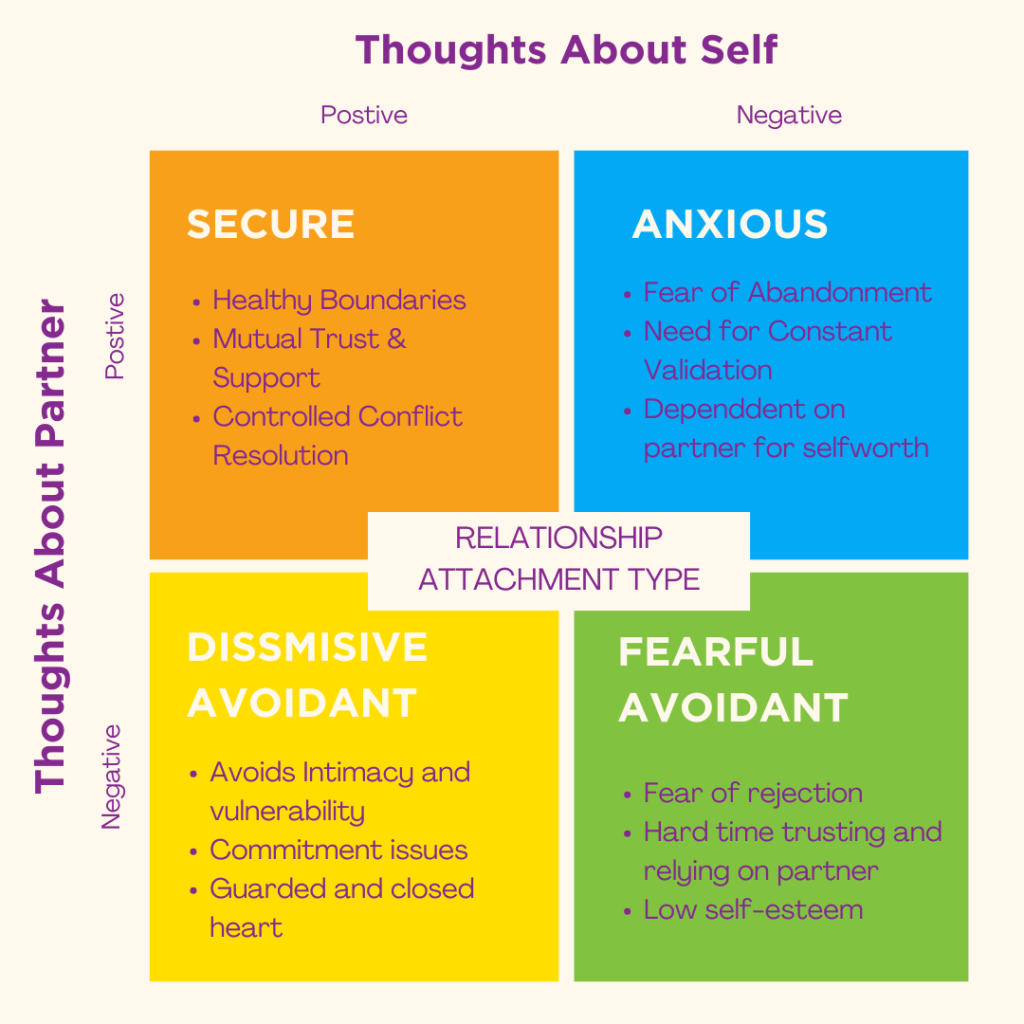
This is why overthinking can become especially intense in relationships.
A delayed reply may not simply feel like a delayed reply.
A change in tone may not simply feel like a change in tone.
A partner needing space may not simply feel like space.
For someone whose attachment system has learned to stay alert, these moments can quickly become emotionally loaded:
Have I done something wrong?Are they losing interest?Have I upset them?Am I about to be rejected?
This is not about labelling yourself as “anxiously attached” based on a social media post. Nor is it about assuming every uncomfortable reaction comes from childhood.
It is about becoming curious.
Sometimes the mind is not responding only to what is happening now. It is responding to what it has learned to expect.
Mentalisation: When Reflection Turns Into Anxious Mind-Reading

A concept I find especially useful in psychotherapy is mentalisation: our capacity to understand our own behaviour and other people’s behaviour in terms of feelings, thoughts, needs, fears and intentions.
When we are relatively steady, mentalisation tends to remain flexible. We can acknowledge uncertainty:
They may be tired.I may be feeling vulnerable today.I do not know what they meant yet.I can ask rather than assume.
But when we feel emotionally threatened, this flexibility can narrow. Instead of wondering, we become certain:
They are angry with me. I have ruined this. They think I am too much. They are going to leave.
This is one of the more painful aspects of overthinking: it can feel like insight. It can feel like intuition. It can feel as though you are being highly perceptive.
Sometimes you are noticing something important.
But sometimes you are interpreting ambiguity through fear.
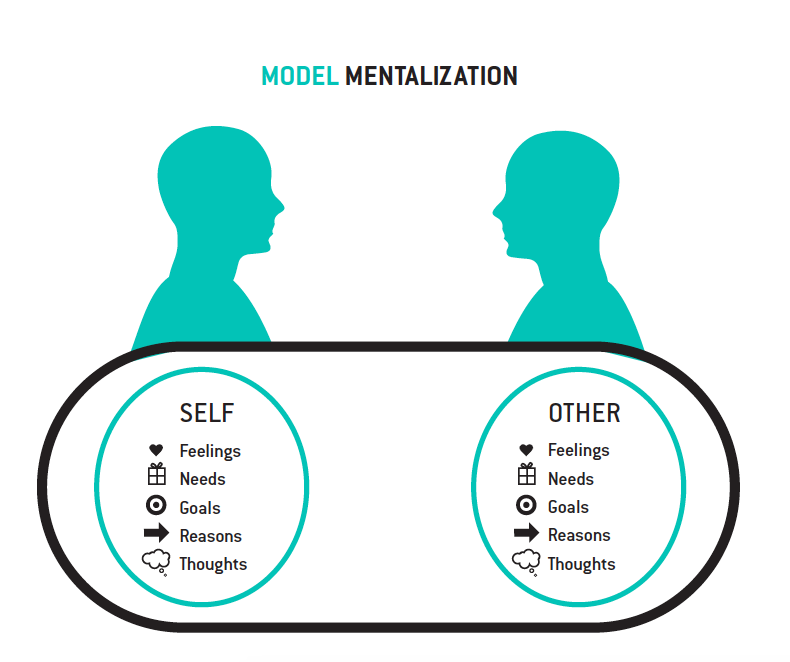
Peter Fonagy and colleagues’ work on mentalising and epistemic trust is relevant here: our ability to understand and trust social information is shaped within relationships, and under threat people can become less open and more vigilant in interpreting others’ intentions. (UCL Discovery)
A useful question is:
Do I know this is true, or does this interpretation feel true because I am activated?
That distinction can be the beginning of a very different response.
The Brain Does Not Only Respond to the Present — It Predicts
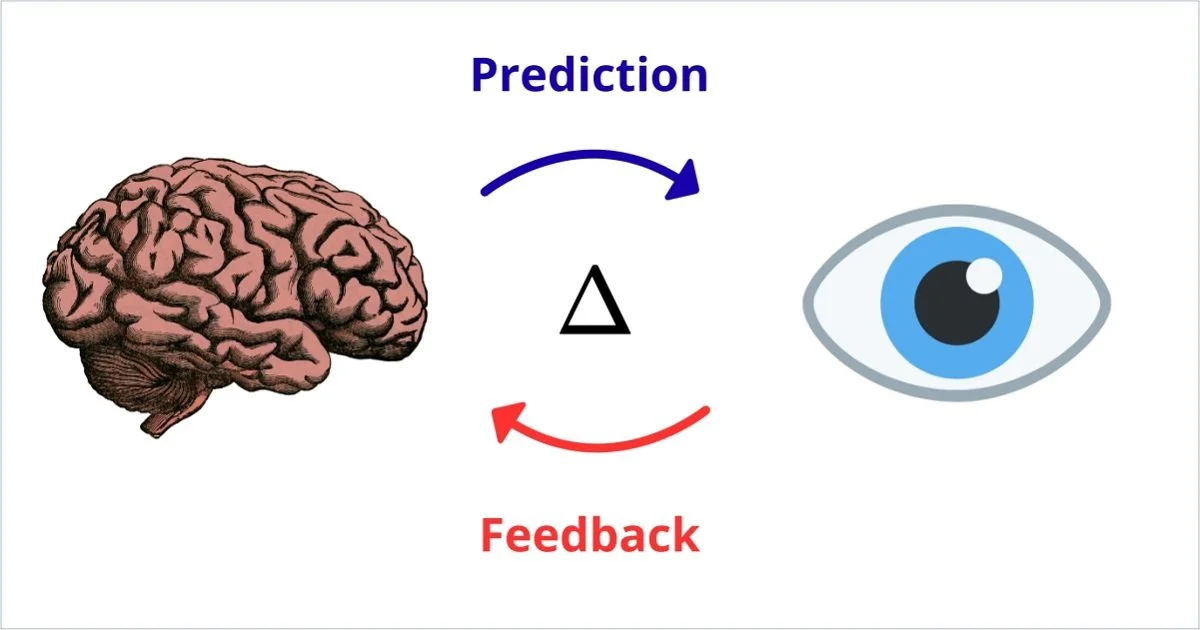
Neuroscience offers another way of understanding why overthinking can feel so automatic.
The brain is not simply waiting passively for events to happen and then reacting. It is constantly anticipating, comparing, interpreting and preparing. Predictive processing theories suggest that the brain uses past experience to make predictions about what is likely to happen next.
This is useful. It helps us navigate the world efficiently.
But it also means that previous experiences can influence what we expect in the present.
If mistakes have repeatedly led to harsh criticism, the mind may become highly alert to getting things wrong.
If emotional openness has led to rejection or shame, vulnerability may be experienced as risky.
If relationships have felt unpredictable, ambiguity may quickly become threatening.
The mind can then start trying to manage life through anticipation:
Let me analyse every possibility.Let me prepare for the worst.Let me notice the danger before it reaches me.
Research on anxiety and uncertain threat supports this understanding. Grupe and Nitschke described excessive anticipatory responding under conditions of uncertainty as a shared feature across anxiety difficulties. In simple terms: anxiety does not only react to danger; it frequently reacts to the possibility of danger. (PMC)
That is why overthinking often takes place before anything has actually happened.
The conversation has not occurred.
The rejection has not happened.
The failure has not arrived.
But internally, the system is already preparing.
Why Uncertainty Can Feel So Difficult
A large part of overthinking is not necessarily about finding an answer. It is about finding certainty.
The mind says:
What if I choose incorrectly?What if I regret this?What if they are upset with me?What if I fail?What if I am not prepared?
In psychology, this is often understood through intolerance of uncertainty: the tendency to experience not knowing as highly uncomfortable or threatening. Intolerance of uncertainty is associated with repetitive negative thinking and appears across multiple anxiety-related difficulties. (PMC)
The difficulty is that life does not offer permanent certainty.
Relationships contain ambiguity.
Decisions contain risk.
Growth contains exposure.
Even healing involves moments where you do not yet know how the next version of you will feel.
If your strategy is to keep thinking until all uncertainty disappears, your mind may never receive permission to rest.
A more therapeutic aim is not perfect certainty.
It is increasing your capacity to remain steady when certainty is unavailable.
Why Overthinking Leaves You Less Clear, Not More Prepared
When people overthink, they often believe they are being responsible. They are trying to prepare well, make the correct decision or prevent regret.
But prolonged threat-monitoring is not the same as clear thinking.
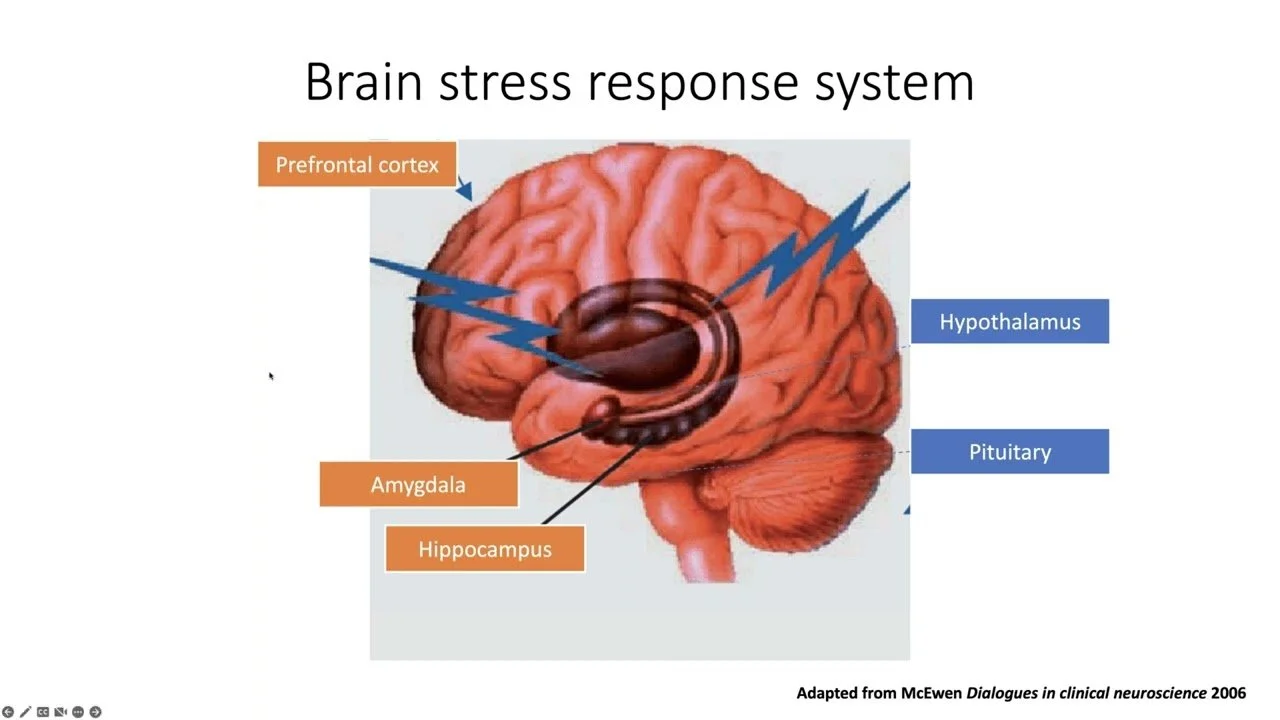
The prefrontal cortex is involved in functions such as perspective-taking, planning, working memory, impulse control and flexible decision-making. Research on stress physiology has shown that even relatively mild uncontrollable stress can rapidly disrupt prefrontal cortex function. (PMC)
This matters because an overthinking mind may be extremely busy while becoming progressively less effective.
You may notice:
difficulty making even small decisions;
an inability to concentrate on the task in front of you;
reassurance that works only briefly;
disturbed sleep;
mental fatigue;
irritability or emotional sensitivity;
reduced creativity;
feeling disconnected from your own judgement.
This is why telling yourself to “think harder” rarely resolves the problem.
When the system feels threatened, thinking often narrows.
When the system feels safer, choice becomes more available.
A Depth-Psychology Perspective: What Feeling Is the Thinking Helping You Avoid?
There is another question I often find valuable, particularly from a psychodynamic or Jungian perspective:
What feeling would I have to meet if I stopped analysing?
Jungian psychology uses the concept of the shadow to describe parts of the self we may struggle to accept or consciously own: anger, vulnerability, dependency, envy, longing, resentment, grief, disappointment or desire.
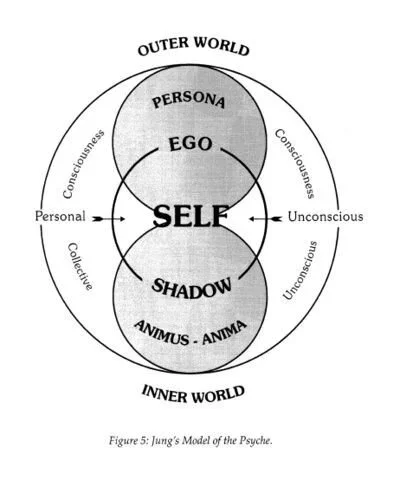
This is best understood as a psychotherapeutic lens rather than a neuroscience claim.
Sometimes overthinking keeps us safely in the intellect. It gives us a problem to solve rather than a feeling to experience.
You might keep analysing whether someone respects you, when beneath the analysis is the painful recognition that you feel unseen.
You might keep questioning whether you made the right career decision, when beneath the thinking is grief about how long you have been living according to someone else’s expectations.
You might keep replaying a conflict, when beneath the replaying is anger that you have been trained to regard as unacceptable.
Thinking can become a way of postponing contact with what we already know emotionally.
The aim is not to abandon thinking. It is to allow thinking and feeling to become integrated, rather than using one to avoid the other.
The Beginning of Becoming On Point
Becoming On Point is not about becoming unbothered, perfectly calm or endlessly confident.
It is about becoming more able to recognise what is happening within you, understand where it may come from, and respond with greater choice.
Your overthinking mind may have been trying to protect you for a long time.
Perhaps it helped you stay prepared.
Perhaps it helped you remain connected.
Perhaps it helped you anticipate criticism or disappointment before it arrived.
There is no shame in having developed strategies that once helped you cope.
But there is also no requirement to keep living by an old strategy when it is now leaving you exhausted.
The beginning of becoming On Point is not learning to silence your mind.
It is learning to ask:
Is this thought helping me respond to the present — or is it protecting me from something I have already survived?
If overthinking, anxiety, emotional overwhelm or pressure are affecting your daily life, relationships or performance, psychotherapy and counselling can help you understand the deeper pattern and develop steadier ways of responding.
Explore support with Becoming On Point or book a session when you feel ready.
This article is for general psychoeducation and does not replace individual mental health assessment, diagnosis or treatment. If you are experiencing significant distress or require urgent support, contact an appropriate healthcare professional or crisis service in your location.
References
Arnsten, A. F. T. (2009). Stress signalling pathways that impair prefrontal cortex structure and function. Nature Reviews Neuroscience, 10, 410–422.
Fonagy, P., Luyten, P., Allison, E., & Campbell, C. (2017). What we have changed our minds about: Mentalizing, attachment and epistemic trust. Borderline Personality Disorder and Emotion Dysregulation.
Grupe, D. W., & Nitschke, J. B. (2013). Uncertainty and anticipation in anxiety: An integrated neurobiological and psychological perspective. Nature Reviews Neuroscience, 14, 488–501.
Hjemdal, O., Hagen, R., Nordahl, H. M., Wells, A., et al. (2019). Metacognitive therapy for generalized anxiety disorder: One-year follow-up of a randomized controlled trial. Frontiers in Psychology.
Mikulincer, M., Shaver, P. R., & Pereg, D. (2003). Attachment theory and affect regulation: The dynamics, development, and cognitive consequences of attachment-related strategies. Motivation and Emotion, 27, 77–102.
Stenzel, K. L., Keller, J., et al. (2025). Efficacy of cognitive behavioral therapy in treating repetitive negative thinking, rumination, and worry: A transdiagnostic meta-analysis. Psychological Medicine.
FAQ’s
Is overthinking a mental illness?
Overthinking is not a diagnosis in itself. However, persistent worry or rumination can appear alongside anxiety, depression, trauma-related difficulties, obsessive-compulsive symptoms or chronic stress.
Why do I overthink conversations?
Replaying conversations can be associated with fear of rejection, criticism, shame or misunderstanding. For some people, it is connected with attachment-related sensitivity to signs of distance or disapproval.
Can therapy help with overthinking?
Yes. Therapy may help you understand the emotional and relational drivers beneath repetitive thinking, develop ways to respond to uncertainty, and build stronger emotional regulation and self-trust.
How do I know if I need professional support?
Consider speaking with a mental health professional when overthinking is interfering with sleep, relationships, work, decision-making, confidence or your ability to enjoy daily life.
